

Pitfalls in ‘ethical’ sourcing for coffee supply chains
It is surprisingly difficult for supply chains to be ‘ethical’ in a comprehensive sense. Even just focusing on traditional ‘development’ concerns related to improving the wealth, education and health of poor households there remains almost comprehensive failure across a wide range of ‘market based’ development programs.
Market based development programs (MBDPs):
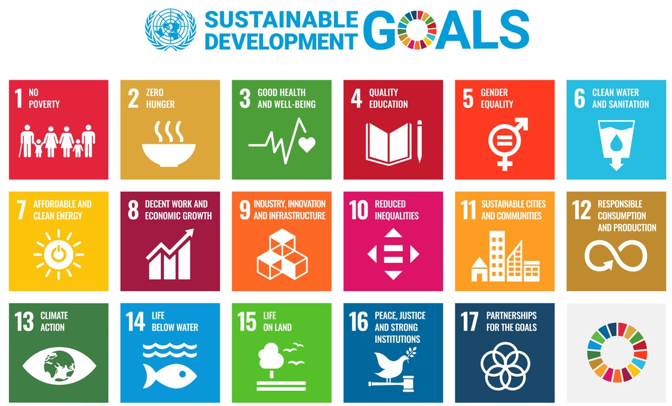
MBDPs are any humanitarian or development initiative that seeks to work through market systems/activities. MBDPs are a key plank of global development strategies because they are the only program that does not rely on ongoing support at the local, regional, national, or global level. As a result, MBDPs remain a key plank for global equitable development concerns (e.g. as outlined in the UN Sustainable Development Goals).
Any organisation claiming their coffee is ‘ethically-sourced’ is really claiming that their sourcing activities act as a MBDP (see ‘what does ethically-sourced even mean’ for why this is the case).
How do MBDPs perform?
While promising as pathways for improved equality (of opportunity) and health and welfare globally, MBDPs are challenging to ‘make work’. In a recent peer-reviewed article published in the esteemed journal World Development we undertook a review of a broad range of MBDPs seeking to understand failure and success mechanisms (see here). Our research on this topic showed three key issues in MBPs acting as development programs include:
A tendency for otherwise successful programs to be highly localised and lacking governance structures/incentive mechanisms to scale to become materially important at a regional, national or global level (this is the ‘scaling’ problem)
Capture of high value programs by ‘elites’ (higher income households)
Failure to generate net improvements in household income/welfare.
Our research also showed a strong prevalence for MBDPs to fail on at least one of these issues, and more commonly to fail on two or even all of them.
A key finding of this research is that the majority of MBDPs fail as development programs due to scale, value and/or inclusivity issues.
Given the importance of MBDPs as a plank for global development strategies, these findings are deeply concerning.
What are the failure mechanisms and why are they so prevalent?
The research highlighted above arose out of our earlier work on innovations to support inclusion of disadvantaged individuals and households in high-value coffee supply chains.
Our work in developing contract mechanisms and quality assurance systems to develop our inclusive supply chain pilot in Uganda presented a stark contrast to much of the current research on MBDPs. Key contrasts included:
|
Others |
Our program |
|
Long, complex, costly contracts Typical MBDPs promoted in the research literature use mechanisms that involve long-term, complex, contracting arrangements between one large supply chain company (called a ‘lead firm’) and many smallholder farmers. Long-term contracts mean that the ‘lead firm’ can (and do) impose costly conditions on participation that can undermine value to smallholder participants |
Just-in-time contracts with no lock-in Our program uses simple contracting mechanisms that are ‘just-in-time’ contracts and do not tie the smallholder into an ongoing contract. This means we rely on being the ‘best option’ to attract producers back to our program. |
|
Costly, invasive, monitoring Have costly monitoring requirements to ensure that smallholder farmers don’t “side-sell” to other supply chain enterprises that might undermine achievement of target volumes and/or result in lower quality produce being sold to the lead firm |
No ongoing monitoring of participants Has no ongoing monitoring requirement as we don’t seek to make our producers supply only to us – instead we rely on ensuring we show value ‘at the margin’ (i.e. that the producer sees value in selling to us instead of others each and every time). As a result we don’t need to recoup monitoring costs from our suppliers |
|
Informal and/or costly and unreliable quality assessment mechanisms In coffee supply chains, others working in systems with many smallholders use quality assessment methods that are either informal (e.g. based on a specific person’s knowledge and presence) or that are highly inefficient. In both cases this means high costs of assessment and low reliability when scaling beyond what one (trusted) person can assess |
Quality assessment mechanisms designed using scientific principles that are fair, transparent, robust and cheap We designed our own quality assessment mechanism based on our own research into sampling mechanisms to identify quality coffee. After designing this mechanism we had test versions built by small, local, fabricators. Testing of our mechanism showed that we could assess coffee lots far more quickly than normal, identify contamination issues easily, and we both had far higher reliability in quality assessments than typical and were able to help our suppliers learn what was needed to pass our quality assessment process. |
|
No or little capacity building beyond basic training Other programs are typically purely focused on the mechanics of getting quality produce from smallholders. While they often pay a higher price for that produce their programs require substantial oversight, typically by non-locals or the elites of a community, or even from western people (the latter is common for coffee programs). There is little training beyond that needed to help producers supply quality produce to the lead firm meaning little in the way of potential for local communities to grow beyond agricultural livelihoods |
Explicitly targets capability growth in local communities Our program explicitly targets capability growth in the local community. Our contracting mechanisms are designed to employ people in skilled work, and to provide the opportunity for micro-entrepreneurship. Our whole supply chain is run solely by locals – we are not needed there to ‘keep an eye on things’ unlike many other coffee programs working in smallholder-dominated systems. This means greater capability growth in regions we work with, the transfer of ‘intellectual property’ to enable these communities to go beyond agricultural livelihoods, and cheaper coffee for you (because you’re not paying for western folks to ‘oversee’ things). |
|
Retain ownership of the local supply chain as a mechanism for profit generating Others programs view sourcing of primary produce (e.g. coffee cherries) as contributing to the business case for the overall lead supply chain firm. This means they are seeking to generate value out of |
Seeks to transfer ownership of supply chain and associated activities to local and regional communities Our approach involves seeking to transfer ownership of the intellectual property and supply chain activities to source communities and groups in source countries. We view our role as enabling a gradual takeover of this ownership and supporting the ability of communities to better extract value from coffee exports. We view our long term role in facilitating ethical sales chains (see ‘ideas in ethical sales chains’) |
|
Have no, or limited, concepts of social impact from MBDPs Other programs that claim to be MBDPs, or are claimed to be MBDPs (e.g. by researchers or local policy makers), typically have no, or very limited, models of how they generate impact. As with many coffee organisations, most view ‘impact’ as being associated with producers accessing their program, and therefore higher prices. But in most cases higher prices are associated with costs in participation borne by the producers resulting in limited net income improvements. |
Has a clearly developed concept of impact Our program derives from published research on pathways for MBDPs to act as materially important development initiatives. We publish research on this, we present evidence on it, and we continually innovate to seek to broaden our direct and indirect (positive) social impacts. |