

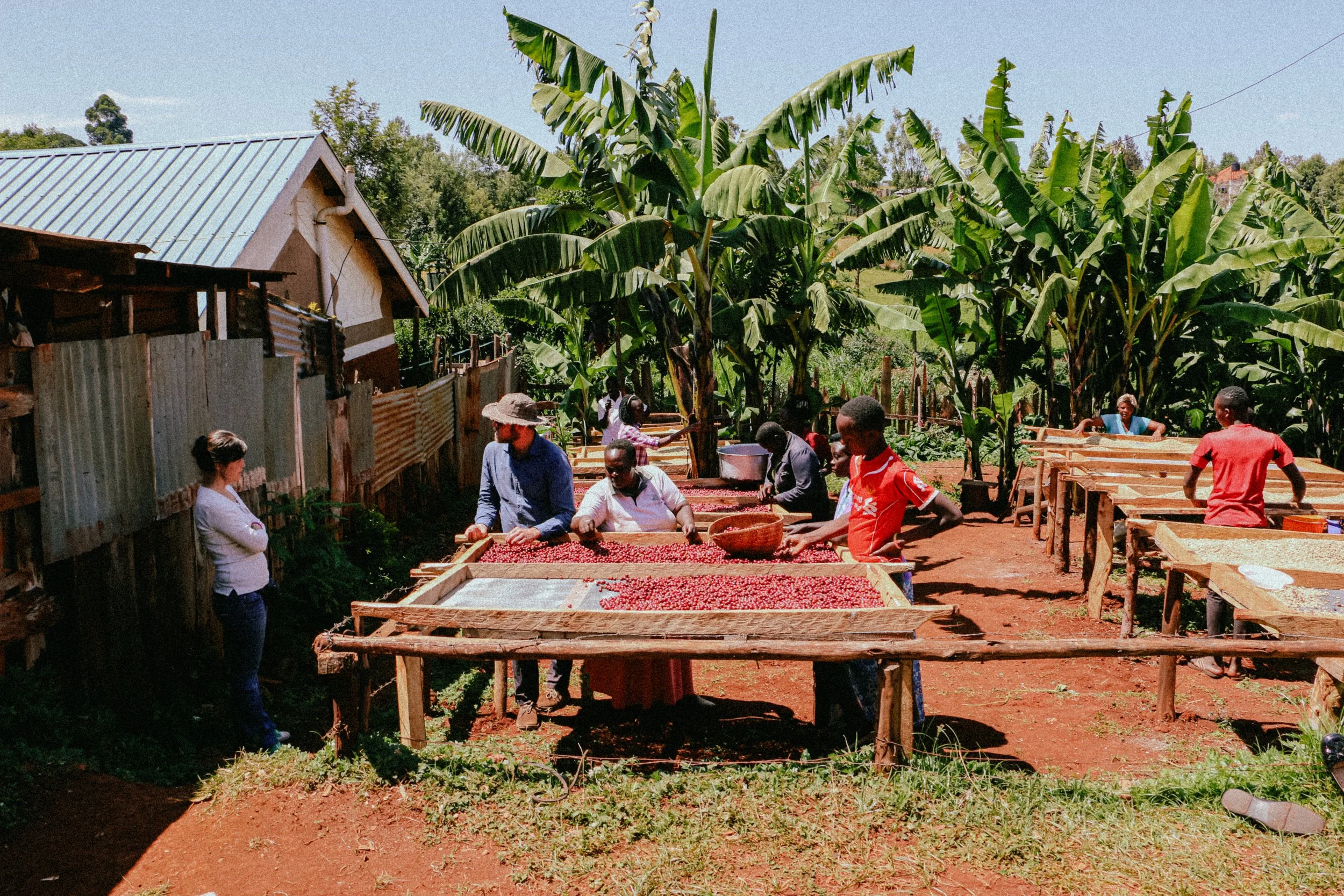
We don’t just buy green coffee and roast it. We actually do the research, and work in-country, to identify how we can build a coffee supply chain program that is truly ethical. We measure, innovate, assess and communicate our achievements and our ideas.
Our core aim is to create a globally unique approach to procurement in agri-food supply chains that involve smallholders in developing countries and that maximises value for source countries while supplying high-quality produce to customers in more developed countries. Then we want to share that knowledge to maximise our impact into the future across the greatest number of people.
This section contains highlights of our research and conceptual background work. We’ll continually add to this so come back often, or join our mailing list to be first to hear about our post updates.
Coffee for nice people
You like coffee as much for its flavour as for the caffeine it contains. You like people, and want to do what’s best for others but, like most of us, don’t have an unlimited budget and need to share the love across other food/household things. You want to spend time understanding where your food comes from but you don’t have the time to do this for everything.
You’re a nice person. You want nice coffee. But you’re not a superhero. That’s our jam - good coffee, with great value created within a program that defines what it means to be ‘ethical' in procurement.
We deal with the complex stuff, you drink great coffee. You trust we do what we say because we have evidence, share what we know, and are leaders in the technical stuff (i.e. research).
You tell your friends and family. We’re all happy, nice, caffeinated people enjoying good coffee that does good things. If you’re into procrastination. dive deep on our coffee, systems and evidence in the ‘learn’ section – just beware this is a ‘choose your own adventure’ type journey that could use up hours of your time!
-
Our coffee comes from the highlands of eastern Uganda. This area, Kapchorwa, is increasingly recognised as a globally important region for quality coffee. Our coffee is derived from SL14 and SL28 Arabica varieties providing a balance between a clean, bright flavour and mixed with fruit (light roast) and chocolate (medium roast).
Our main focus is on showcasing the terroir of the regions from which we buy coffee. For Uganda, this means clean cup profiles (not crazily fruity like you can get from some Ethiopian coffees) with solid roast development (typically slightly more development than many speciality roasters).
For our espresso blends you can expect a medium roast that shows well through milk while maintaining a bright flavour profile as straight espresso or as a long black.
For our filter coffee we roast lighter to showcase the best of the coffee. For our natural process beans from Uganda this typically means a really clean cup profile with a slight background sweetness. For our washed process beans this comes through as a clean cup with a small amount of fruit coming through.
See the links below for details on taste profiles for the coffee varieties and regions we source from:
Washed process coffees (coming soon)
Natural process coffees (coming soon)
Other processing methods (coming soon)
Understanding roast profiles (coming soon)
-
Almost every speciality coffee café or roaster you come across will claim they ‘source ethically’ or something close to this (e.g. many say something about ‘respect’ that seems to imply more about misunderstanding of the term ‘respect’ than any actions they take).
The majority of these claims are just words. They are not tied to any truly ethical action and cannot be seen as real claims.
In the below we provide resources to help you understand what ‘ethics’ really means, how it can be applied to coffee supply chains and consumption, the true meaning of ‘ethically-sourced’ (for most cafes/roasters you’ll see with these and related words) and the types of questions you can think about when you see these words to understand whether sourcing really is ‘ethical’.
About ethics:
Ethical claims and critical review
Intersection Traders – a brief overview of our ‘ethics’
-
In these posts we provide background to the technical and theoretical aspects underpinning the design, operation and impact of the Intersection Traders program.
The posts here contain a mix of published research, concepts/theories that underpin works in progress (targeting publication), innovation and impact. We provide a summary of our project impact based on our raw contract data and outline future activities to support growing impact assessment, innovation and sharing of knowledge.
Science and innovation
Quality assessment innovations for coffee cherry procurement
Good intentions… why not help growers themselves sell processed coffee in smallholder settings?
Economic concepts and theories in smallholder dominated coffee supply chains
Evidence
-
Intersection Traders seeks to generate value and positive impacts for all participants in the coffee supply chain – from landless households working in our picking teams or as procurement agents through to customers in our final market place. This concern, value for all, is how we arrived at our name – seeking the intersection of mutual benefit in trade through innovation and impact-led research.
What is an intersection?
In set theory, the intersection denotes the area for which all sets (stakeholders) of interest are overlapping (have a positive outcome in). See here for an overview.
Intersection Traders has its core objective as innovation to support growth in the value generated by coffee supply chains and in ensuring that value is shared fairly across the relevant stakeholders participating in those.
We’ll be adding a bunch of content here over the coming 12 months – content that will help outline concepts of value and how we integrate those into our supply chain program. For now see below for some initial brief points on forthcoming posts.
· Value means more than just more income – our research shows that we can and must do more to truly have impact on individuals and households in terms of increasing their welfare. We seek to trial innovations in payment mechanisms that will allow our supply chain participants to better grow household wealth and achieve savings and educational aims
· Global coffee prices have increase by more than 100% at source in many areas in the last 4-5 years. This means that even commodity market programs are paying ‘more’ and that existing landholders are really doing better than they have in a long time with respect to coffee market participation. In this environment how do we have impact? We’ll outline our broader impact targets that derive from our years of expertise in rural development research to show that high prices mean we must concentrate more, not less, on who we think about when we consider ‘inclusivity’ in target participation
· Who gets better value is often more important than ‘how much’ – issues with elite capture in supply chains remain largely ignored in most supply chain programs
· What about value for consumers? the overarching importance of quality and value for money for target markets: The role of efficiency and quality assurance innovations. We’ll provide an overview of the centrality of our quality assurance program and target future inclusions to grow the quality of our product offering
· Efficiency, its centrality to financial sustainability, impact and value, and our innovations and concepts to increase supply chain efficiency
· Value in the impact of a ‘dollar now’ – why to spend your money, or invest/bequest with Intersection Traders
· Our pricing strategy for core procurement – how we decide on the price we pay for coffee cherries delivered from coffee growers participating in our supply chain
In addition we’ll be working more on the design of pilot initiatives to integrate incentives for environmental sustainability and post on those concepts here.