

Good intentions… why not help growers themselves sell processed coffee in smallholder settings?
In partnership with a PhD student at Gottingen University in Germany working with us we looked into a common suggestion purporting to increase value to household coffee growers – that they engaged in processing of coffee to produce ‘parchment’ instead of selling fresh coffee berries.
Note: this brief is based on our published paper: Arslan, C., Gregg, D., & Wollni, M. (2024). Paying more to make less: value degrading in the coffee value chain in eastern Uganda. American Journal of Agricultural Economics, 106(1), 96-117 available here.
Value chain upgrading is the process of seeking to increase one’s benefits within a value chain by moving to capture ‘higher value’ within the supply chain. A range of methods for upgrading available, but one of the most common is ‘functional upgrading’ wherein an actor seeks to adopt processes used by upstream actors. For example, a livestock farmer might seek to install an abattoir in order to be able to sell processed meat (instead of livestock). This ‘vertical integration’ can work well in cases that the market for processed goods is well-established and in which there are no quality assurance issues in the market for (further) processed goods.
Within the setting of eastern Ugandan highlands this idea of functional upgrading was regularly promoted as a way for households to realise more income. In essence, it involved households processing fresh coffee berries at home to create ‘parchment’ coffee. Ostensibly this is potentially a good idea if parchment coffee was worth sufficiently more than the equivalent value of fresh coffee. But it is not.
Parchment (home-processed coffee) is actually worth the same or less than the equivalent volume of ‘fresh’ coffee sold. One must also account for additional costs in processing parchment at home including capital investment costs (a coffee ‘grater’ to remove the skins and some fruit from the cherry, barrels for fermentation, and tarpaulins/tables for drying). Parchment coffee also takes between 2-6 weeks to dry before being sellable.
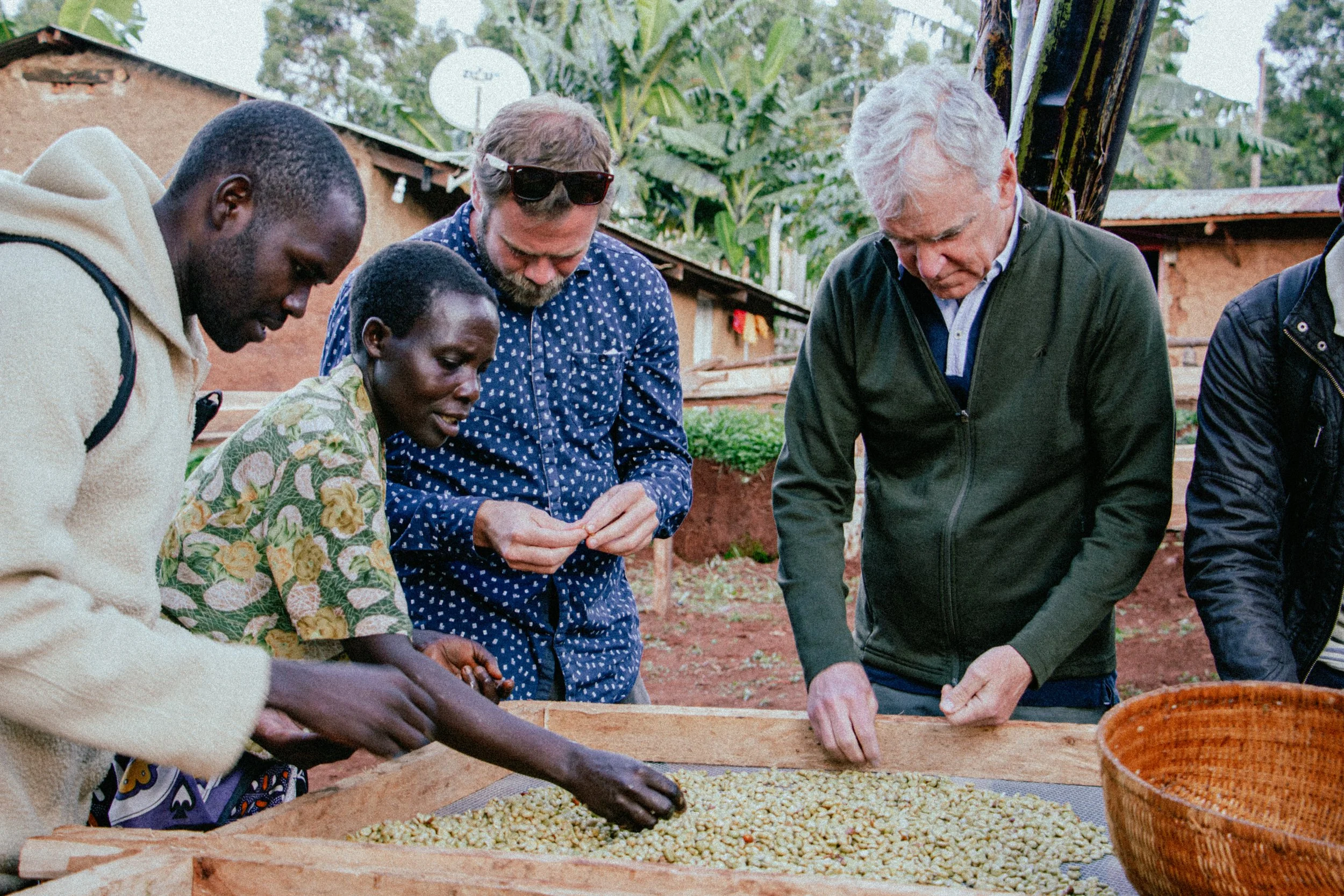
Our research showed that this value shortfall resulted in the majority of households that undertook home processing having lower unit revenues (revenue per kilogram of equivalent fresh coffee sold) compared to those selling fresh coffee berries. The only cases that indicated a possible (though not guaranteed) income benefit was:
In cases where households were far from buying agents meaning that it was difficult for them to sell fresh coffee
Households that were relatively sophisticated in sales appeared to tend to sell ‘good’ coffee on the fresh market and reserve ‘bad’ coffee for processing into parchment.
The latter aspect above (selling ‘bad’ coffee as parchment) makes use of the fact that the quality of parchment coffee is far more difficult to discern than the quality of fresh coffee. This generates a ‘market for lemons’ in which the market for parchment is inherently low value and low quality with no potential for quality differentiation (see our review of the ‘crowdy three’ to understand this aspect a bit more).
Our research (and this review) show the importance of not taking ideas around ethics as ‘obvious’ – they typically are not. Our work in this and other aspects continually seeks to generate the insights we need to innovate in supply chain operations to support truly ethical outcomes.